
“What if I had done nothing?”
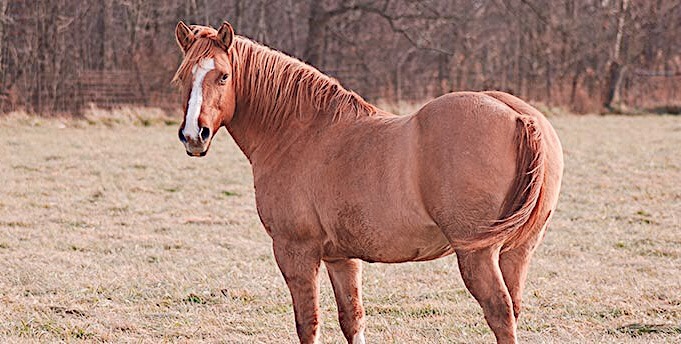
Like humans, horses that are over weight are at a higher risk of developing many serious and potentially fatal health issues. Some of these issues consist of excess strain on organs, joints, and limbs, fatty tumors in the abdomen, and laminitis (the inflammation of sensitive tissue inside the hoof that can result in permanent lameness).
With this knowledge, a researchers at Virginia-Maryland Regional College of Veterinary Medicine conducted a study to see just how many horses are affected by obesity and are at risk of developing these life threatening conditions. The results were shocking. They found that about 51% of horses in the study were found to have a BCS (body condition score) of 6 which basically means that 51% percent of the horses were considered to be fat. Of those horses, 19% were found to have a body score of 8 or 9 which is extremely overweight. To put this into perspective, the ideal BCS of horses is between 4 and 6.
When they took a closer look at the potential cause of the drastic increase of horses’ body weight over the years, they found that not only are horses being ridden less but that the grass that they graze upon is full of more nutrients than it used to be. There once was a time where domesticated horses were used as work horses and transportation and they didn’t graze freely in the grass that was fortified for the consumption of other livestock. Now, horses are mainly used for recreation and the ones that aren’t are typically only carrying a moderate workload at best. Therefore it is no surprise that the number of obese horses is skyrocketing.
It is crucial to watch for horses that are starting to gain more weight than is normal because it is easier to prevent and reverse the effects of weigh gain before they develop a serious health condition before it is too late. This can be done simply by maintaining a rigorous exercise routine on an (almost) daily basis and by reducing the amount of empty calories they consume.
Sources:
Lenz, Tom. “Obesity | AAEP.” http://www.aaep.org/horsehealth/obesity
“Overweight Horse | AAEP.” Home, 20 July 2005, http://www.aaep.org/horsehealth/overweight-horse
Virginia Tech. “Fat Horses Face Health Problems.” ScienceDaily. ScienceDaily, 10 July 2007, www.sciencedaily.com/releases/2007/07/070709091803.htm

